Six months into 2026, now is the perfect time to ask a hard question: is your organic social strategy performing?
Many brands are producing more content than ever, yet seeing diminishing returns. Reach is declining. Engagement is becoming harder to earn. Audiences are behaving differently.
The issue isn’t effort. It’s that the platforms are continuing to evolve and keeping pace is challenging.
As we head into the second half of the year, here are five shifts every brand should review and what the organisations winning attention are doing differently.
-
The Meta wake-up call
Let’s start with an uncomfortable truth: Instagram organic reach fell 30–40% across every post format in 2025.
For brands still measuring success by impressions and likes, that’s a worrying trend. But it’s not a bug in the system. It’s the system working exactly as Meta designed it.
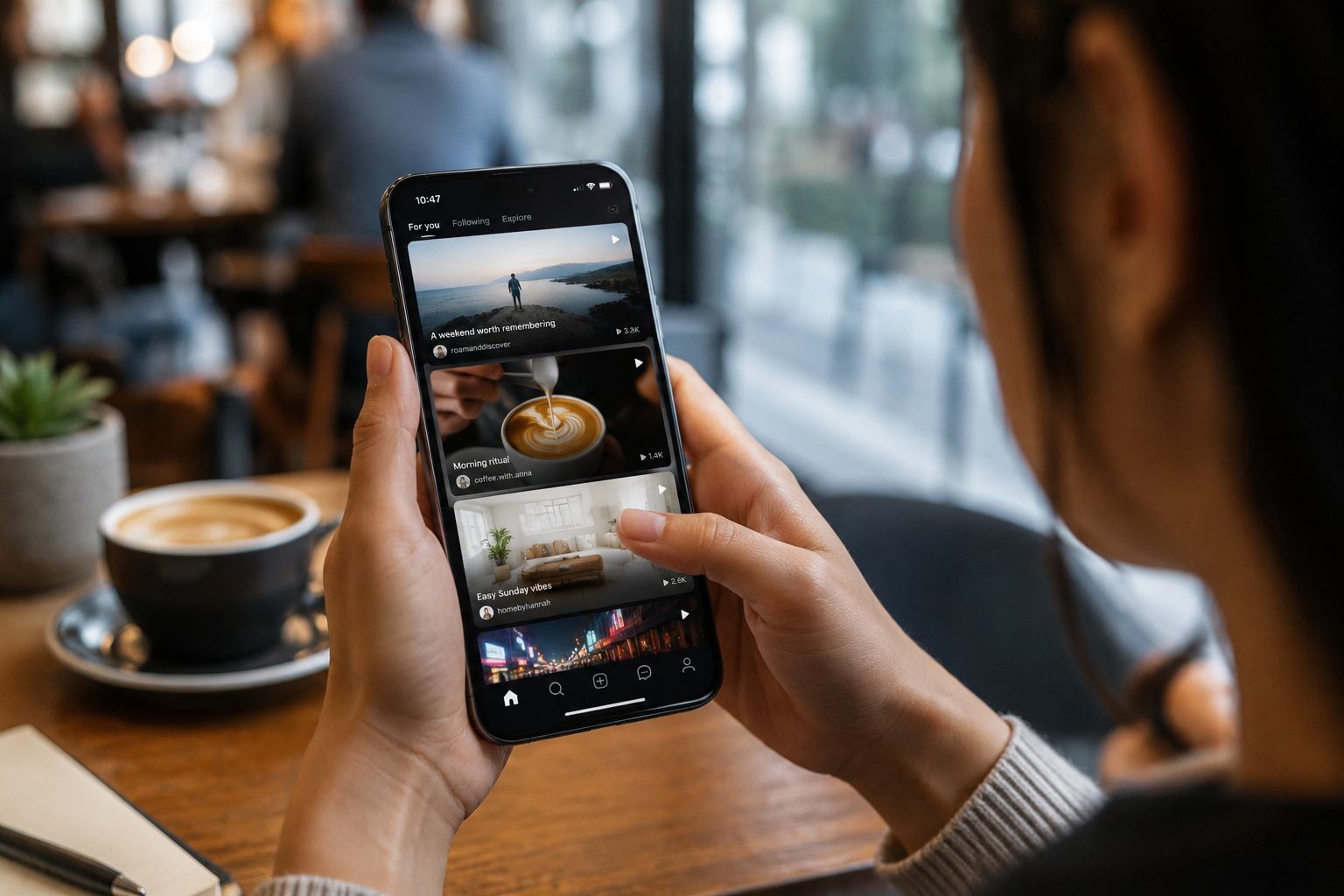
Instagram’s algorithm in 2026 prioritises four signals that much brand content struggles to generate: DM shares, saves, Reel watch time and profile visits. Content that triggers these behaviours gets distributed more broadly. Content that collects likes alone tends to stay within existing follower networks.
The strategic implication is significant.
Content now needs to be built around a simple question: Would someone send this to a friend?
Not just: Does this showcase our product? or Is this on brand?
Would someone actively choose to share it?
Facebook is moving in a similar direction. Meta has been testing limits on how many organic links business pages can share, signalling a preference for keeping users on-platform rather than driving them to external websites. The algorithm increasingly rewards engagement and retention over traffic generation.
Brands that adapt their content strategy to this reality will find the platform far more cooperative than those still treating it like a digital noticeboard.
And yet there’s opportunity hidden within the challenge.
Meta’s October 2025 algorithm update increased the visibility of Reels from creators on the day of publishing, while more than half of Facebook News Feed content now comes from accounts users don’t follow. For brands willing to invest in consistent, share-worthy video content, the algorithm is actively searching for new content to distribute. The platform isn’t closed. It’s selective.
-
TikTok’s structural advantage
While Meta’s organic reach continues to tighten, TikTok’s distribution model remains fundamentally different.
Median brand follower counts on TikTok grew by more than 200% year-over-year in 2025. That’s not accidental. It’s a direct result of how the For You feed works.
Unlike Instagram or Facebook, where reach is often influenced by existing audience size, TikTok distributes content primarily based on performance signals such as watch time, shares, and replays. By the end of 2025, more than 70% of brand video traffic came from the For You feed.
In other words, TikTok is still actively finding audiences for content that earns attention.
What’s particularly interesting is how this benefits brands that might seem unlikely social media success stories.
One of our clients, SABCO Australia, is a great example. As a cleaning products brand with more than 130 years of Australian heritage, it isn’t the category most marketers associate with organic growth on TikTok.
Yet by leaning into native platform behaviours “Get Ready With Me” cleaning routines, a 12 Days of Christmas cleaning series, relatable “mum worthy” content and satisfying before-and-after transformations, we’ve helped build a genuine audience around the brand.
This isn’t a brand chasing viral stunts. It’s a brand speaking the language of the platform consistently and authentically.
That’s TikTok’s greatest advantage: content that earns its own audience.
-
Community is the new follower count
Here’s the statistic that should reshape every social media dashboard: a brand with 8,000 highly engaged followers can outperform one with 200,000 passive followers.
The era of chasing follower counts is fading. The era of building communities has well and truly arrived.
Real communities have shared identity, inside jokes, passionate advocates and people who feel proud to be part of the story.
Kenworth Australia provides a compelling example. With more than 136,000 followers and thousands of active conversations happening around the brand, Kenworth has built something many corporate pages never achieve: a genuine community.
Truck enthusiasts, owner-operators, drivers, and families don’t engage because they need product specifications. They engage because the brand connects them to something meaningful, Australian manufacturing, life on the road, and a heritage that stretches back generations.
That level of engagement comes from content that prioritises belonging over broadcasting.
Content that says, “We know who you are” rather than “Here’s what we make.”
At a time when trust in traditional brand communications continues to decline, audiences are gravitating toward communities and individuals that feel more human and transparent.
Brands that see themselves as community builders rather than content publishers are creating far more durable social equity.
-
The human premium
As AI-generated content becomes increasingly common, something unexpected is happening.
The value of human-created content is rising. Behind-the-scenes footage, process content, imperfections, and moments of genuine craft have become powerful signals of authenticity.
Consumers are becoming more adept at recognising overly polished, synthetic content. At the same time, many are actively seeking evidence of the people behind the brand.
Nearly one-third of consumers report feeling less comfortable with obviously AI-generated brand content, despite AI now being embedded in most marketing workflows.
The brands navigating this shift successfully are using AI for efficiency drafting, repurposing, and production support, while ensuring their public-facing content still feels unmistakably human.
For brands with strong heritage, craftsmanship, expertise, or compelling customer stories, this creates a significant opportunity.
A truck driver’s sunrise run across the Nullarbor. The satisfaction of a genuinely clean floor. The people behind the product. These moments don’t need polishing. They need capturing.
And increasingly, audiences value them because they can’t be manufactured.
-
The features brands are sleeping on
Two platform features stand out as significantly underutilised.
The first is Instagram Trial Reels. Trial Reels allow brands to show content to non-followers before publishing it to their main profile. If the content performs well with a cold audience, it can then be distributed more broadly.
Instagram chief Adam Mosseri has specifically highlighted this feature as a valuable tool for creators and brands in 2026. It’s effectively built-in A/B testing for organic content, yet many brand teams still aren’t using it.
The second is Threads. With more than 400 million monthly active users and 141 million daily active users as of early 2026, Threads has emerged as a serious platform for conversation and discovery.
In several markets, it has already surpassed X in daily mobile users.
For brands, organic reach remains unusually strong compared to more mature platforms. It’s where cultural conversations are increasingly taking place, and the current window of organic opportunity won’t stay open forever.
What this means for your brand in the second half of 2026
The common thread across every algorithm update, platform shift, and emerging trend is simple:
- Platforms are rewarding genuine human behaviour
- Shares
- Saves
- Watch time
- Profile visits
- Community participation
- Meaningful engagement from people who care
The brands succeeding today, from a heritage truck manufacturer with a fiercely loyal transport community to a 130-year-old cleaning brand finding its voice on TikTok, aren’t winning because they have the largest budgets or the biggest audiences. They’re winning because they’ve recognised a fundamental truth that organic social in 2026 isn’t about broadcasting to an audience. It’s about building one.
So, as we move into the second half of the year, this is the moment to reset what isn’t working, double down on what is, and make sure your social strategy reflects how platforms and audiences behave today.
If you’d like to understand how your organic social strategy stacks up against where the platforms are heading, let’s talk.